

Dramatically boost your retirement assets with tax-deductible corporate contributions
How an Individual Pension Plan (IPP) works
An IPP is a tax-deferred savings vehicle used to invest and save for retirement. Contributions are tax-deductible and made directly from the corporation. Similar to an RRSP, the assets inside an IPP are tax-deferred until withdrawn, at which time they are treated as income.
How much can be contributed to an Individual Pension Plan?
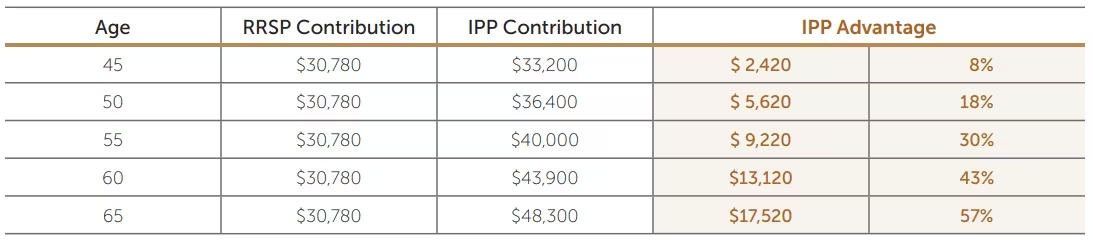
Who is a good candidate for an Individual Pension Plan?

Business Owner

Registered Professional

Middle Aged Adult

T4 Earnings of $100k+*
*an IPP can be established for someone with lower earnings
Case Study
A business owner, aged 55, incorporated for 24 years, maximum T4 earnings of $178,600 with a current RRSP balance of $291,866.
- $156,600 in immediate past service funding, tax-deductible to the company
- $221,700 in qualifying transfer (from existing RRSP balance)
- Up to $446,211 more in tax-deductible contribution room over working years (excluding past service)
- The IPP balance could be up to $1,306,700 more than the RRSP balance
All the above figures are based on 2022 prescribed assumptions.
Advantages of an Individual Pension Plan
- Increased tax-deductible contribution room – up to 65% more than an RRSP
- Can reduce passive income in corporation
- Tax-deductible company contributions for prior years (past service)
- Richest benefit plan in Canada – 2% defined benefit pension plan
- All costs are tax-deductible to the company
- Creditor protection
- Increased corporate and personal tax savings
- Can include employed family members and pass on wealth to the next generation
Next Steps
Contact a Ward & Uptigrove Wealth Management representative at 519-291-3040 or email [email protected] to learn more.