
Wealth Management
Other Topics:
-

Charitable Gifting
As the holiday season nears many Canadians will be making the bulk of their charitable donations for the year and we’d like to help you make the most of the ones you may be considering. According to Statistics Canada, on an annual basis Canadians donate $10.6 billion to charitable and non-profit organizations for selfless reasons.…
-

Pay Down Debt vs. Invest
The pay down debt versus invest is an age-old question that doesn’t have a 100% correct answer, and the better option can only be determined with hindsight. Paying Down Debt The benefit of paying down debt is that it provides a guaranteed rate of return equivalent to the cost of borrowing or the interest rate…
-

Tax Planning Should Be Part of Your Financial Plan
Did you know that almost every financial decision you make could have tax consequences that you may not be aware of? Life milestones, such as getting married, saving for university, changing jobs, or retiring, all have tax implications that could have a significant impact on your overall finances. It is important to consider tax planning…
-

Funding Options for Your Child’s Education
As parents, the responsibility of providing your child with the necessities of life can be taxing on its own and adding in the extra-curricular activities like after school programs, arts, sports etc. can really eat into the household budget. It can be tempting for parents to consider borrowing to help with the cost of post-secondary…
-

Protect Yourself & Your Loved Ones
By developing a Succession Plan for your business, it ensures you have the right strategy in place for when you retire, sell your business or passing it onto someone else (a family member, friend, an entrepreneur, or an employee). Having a Succession Plan in place can: By having a Will in place, allows you to…
-

12 Tips for Smart Financial Planning
Tip 1 – RESP Government Grants A Registered Education Savings Plan (RESP) is a government-assisted investment vehicle that helps families to save for a child’s education. A key incentive of the plan is the federal government’s Canada Education Savings Grant (CESG) which is equal to 20% of the annual amount contributed, up to a maximum…
-
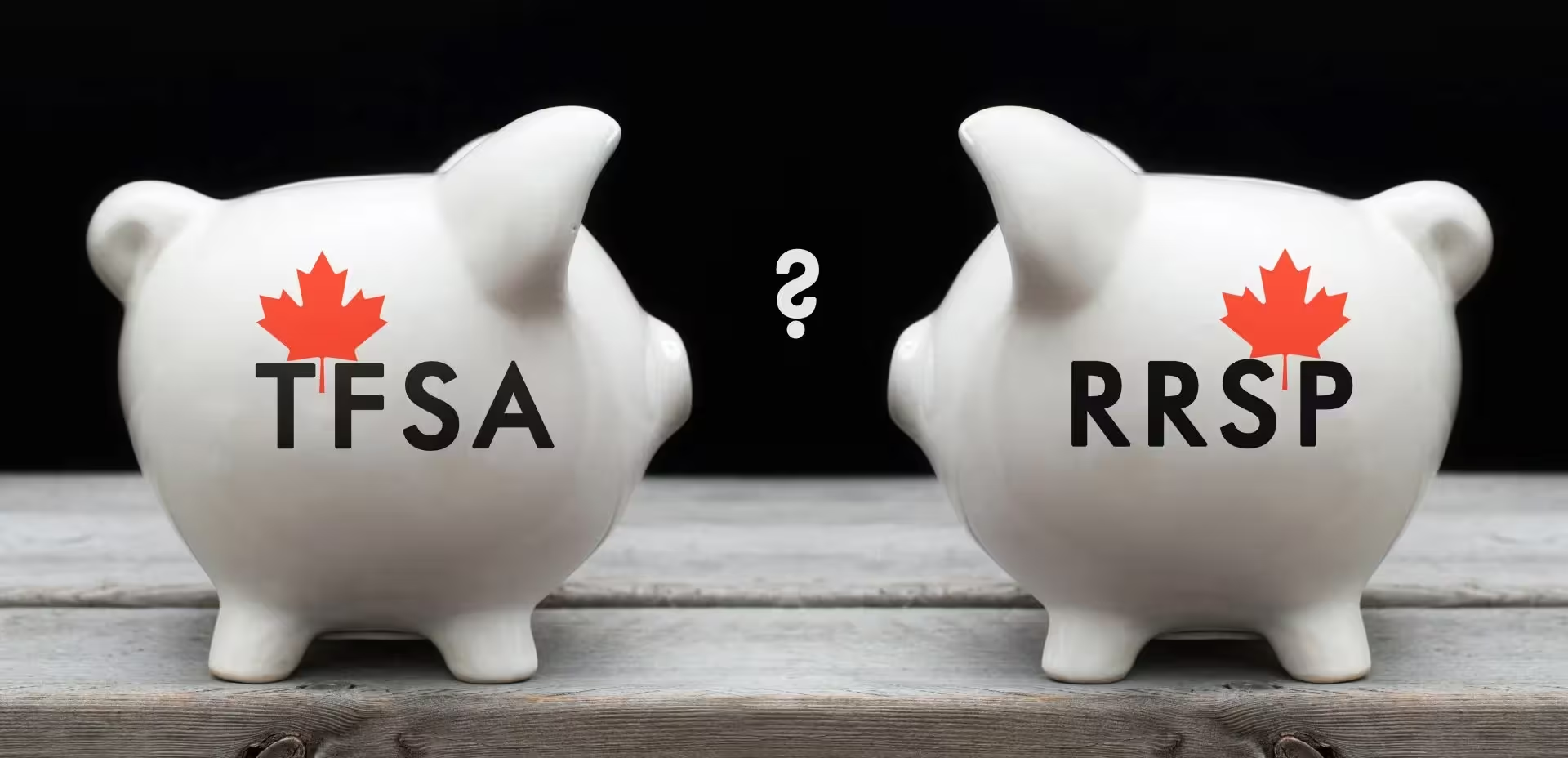
TFSA or RRSP? Take Your Pick
Should you invest in a Tax Free Savings Account (TFSA) or a Registered Retirement Savings Plan (RRSP)? For most, the answer is “a bit of both.” Both plans are registered and provide a way to save for your retirement and other future lifestyle expenses. Current income levels play a large role in answering the question…
-

Retirement Myths
The leading edge of the Boomers turned 65 six years ago. On average, 1,250 Canadians turn 65 years old every single day. Most Boomers were born between 1961 -1965. That’s why you feel everyone has been turning 50. And people are living longer, much longer. With all of this happening, retirement planning is a common…
-

Your FIN (Financial Independence Number)
Every investor wants to know the answer to the question, “How much money will I need to retire?” Many factors contribute to this determination and it is unique for everyone. For example, someone who earns $70,000 per year will likely be able to live comfortably on $60,000 per year in retirement, but another person who…
-

Spousal RRSPs To Reduce Taxes
Spousal Registered Retirement Savings Plans are not universally understood by investors, and are certainly not utilized to their maximum benefit. These financial vehicles were designed to encourage retirement savings with tax breaks at time of contribution and at time of withdrawal, just like regular RRSPs. Spousal RRSPs contain additional advantages for couples who have a…
-

Saving for Retirement and the Home Buyers Plan
A couple who have begun to save for their retirement can access up to $70,000 from their RRSPs to buy or build their first home. The Home Buyers Plan (HBP) encourages savings and home ownership by allowing first-time buyers to withdraw up to $35,000 from their RRSP without incurring additional income tax. People who have…
-

What to Know Before Taking Advantage of the Current Interest Rates
Current economic conditions have interest rates the lowest they have been in years. Central banks lower rates in time of economic downturn to stimulate the economy and make borrowing money seem very appealing. It is important to keep in mind when borrowing that interest rates will not stay low forever. Canadians need to prepare for…